

Our filament winding process utilizes a resin matrix and a reinforcing fiber, wound in a precise pattern to produce the ultimate mechanical strength and dielectric properties required for each specific application.
We have the engineering capability to combine three families of resins with four types of reinforcing fibers, creating custom filament wound products that are lightweight and have high mechanical strength. They also are corrosion resistant, wear resistant and have excellent electrical insulation properties. Depending on the application, our engineers will work with you to develop a product using a combination of resins and fibers creating a solution to fit your needs. Contact us today and let’s discuss how we can help develop a custom glass fiber filament wound product to meet your challenges.
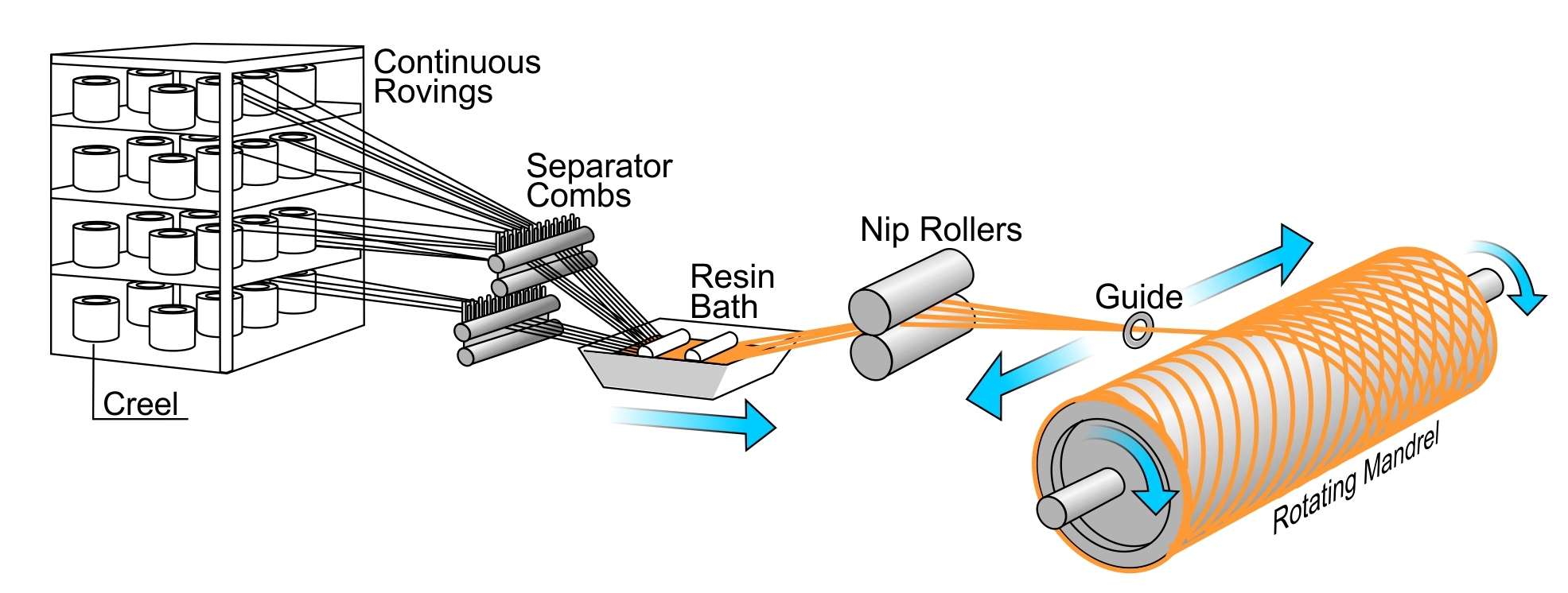
Types of Resins Used in the Production of our Fiberglass Filament Wound Products:
- Epoxy Resins - Most commonly used in our products because of its high-strength and excellent electrical insulating properties.
- Vinyl Ester Resins - Corrosion resistant resin used in corrosive environments such as acid.
- Polyester Resins - Basic resin for basic functionality in common environments and applications.
Types of Fibers Used In The Production Of Our Filament Wound Products:
- Glass Fibers - Used for high strength and excellent electrical insulation properties
- Carbon Fibers - Used for very high strength and lightweight applications
- Kevlar Fibers - Used when wear and impact resistant applications are needed
- Polyester Fibers - Electrical insulation and lower cost applications
Our Advanced Filament Wound Products Have Properties Including:
- High Mechanical Strength
- Light Weight
- Excellent Electrical Insulation
- Corrosion Resistance
- Wear Resistance
Filament winding capacity
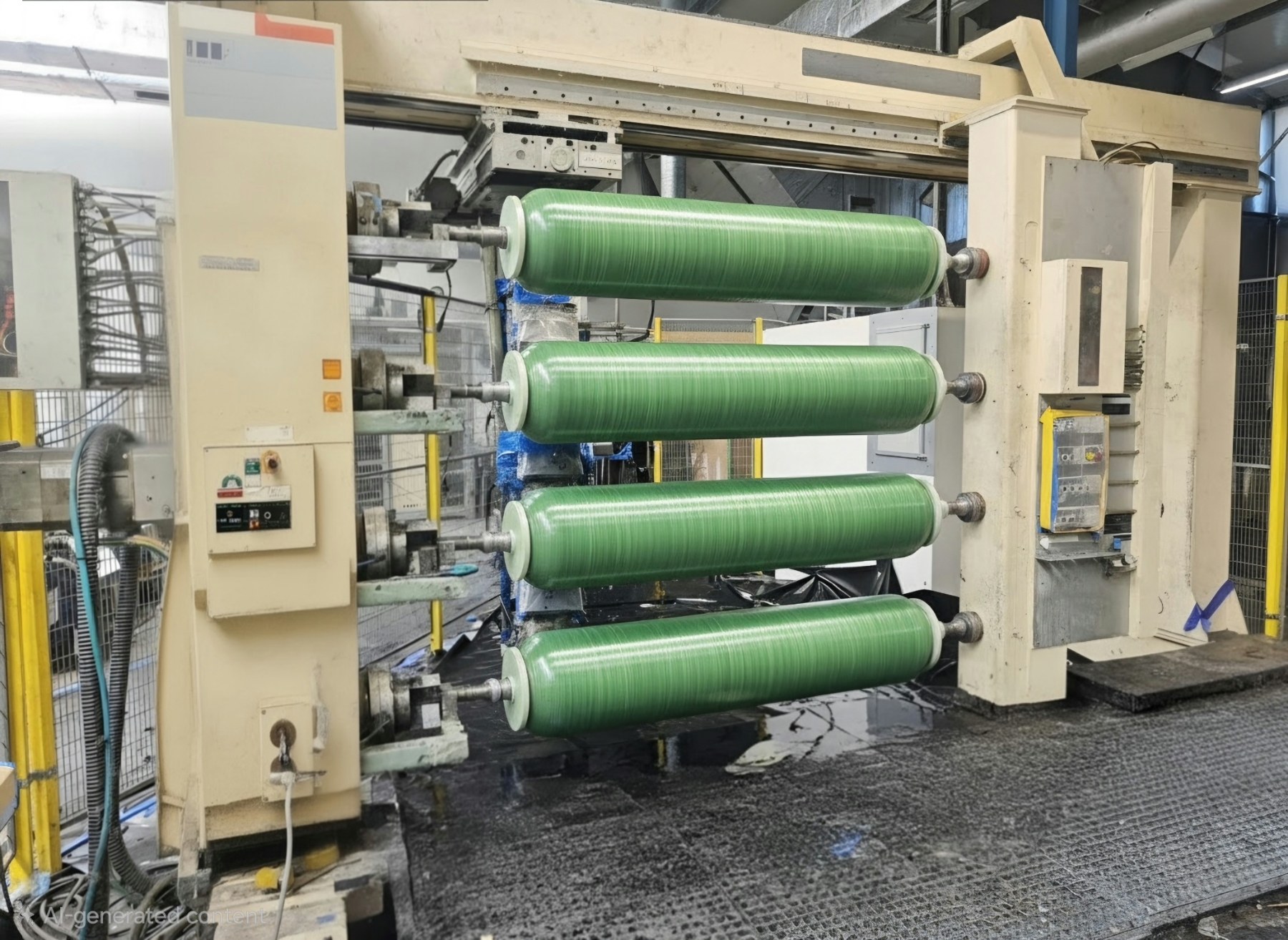
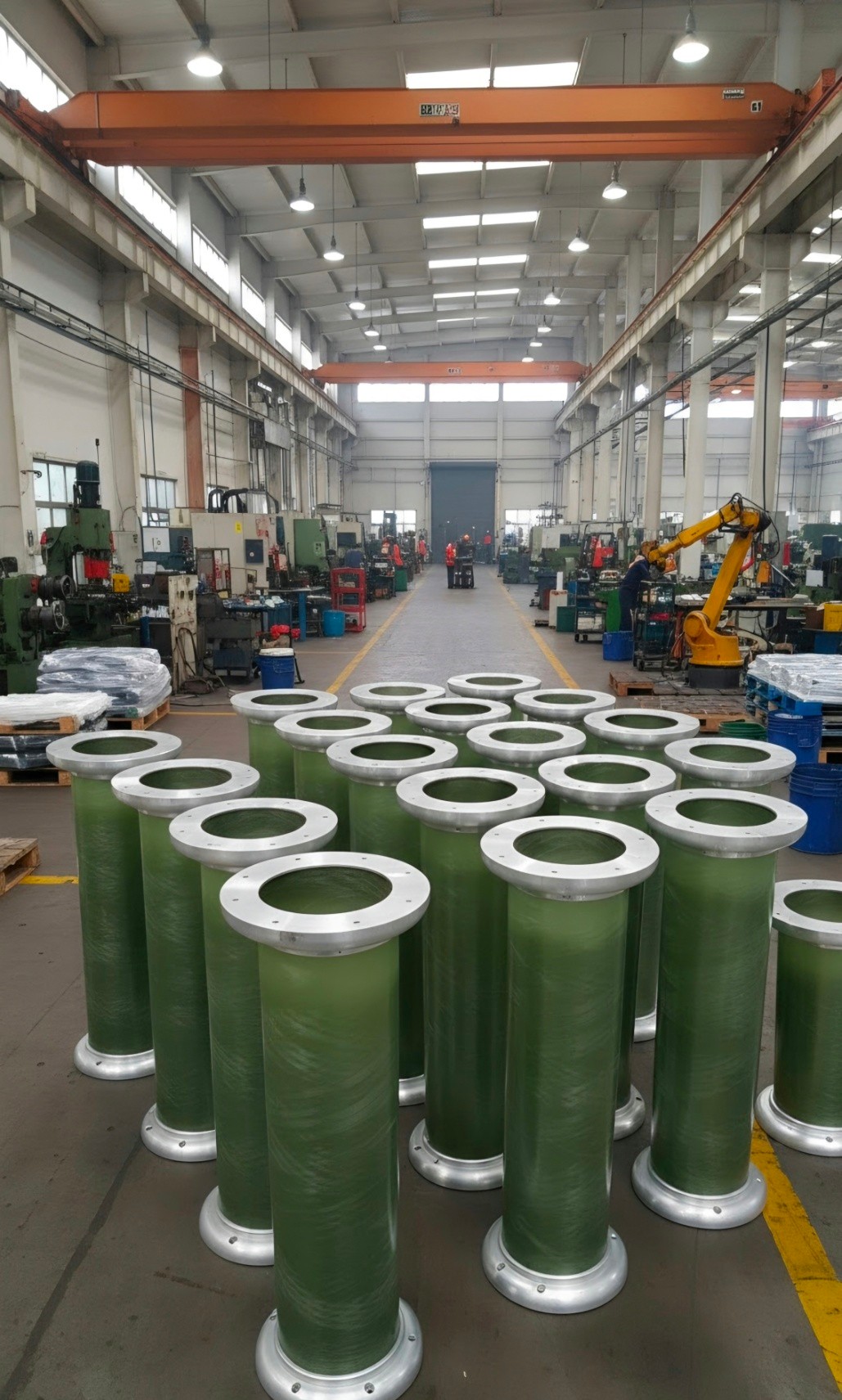
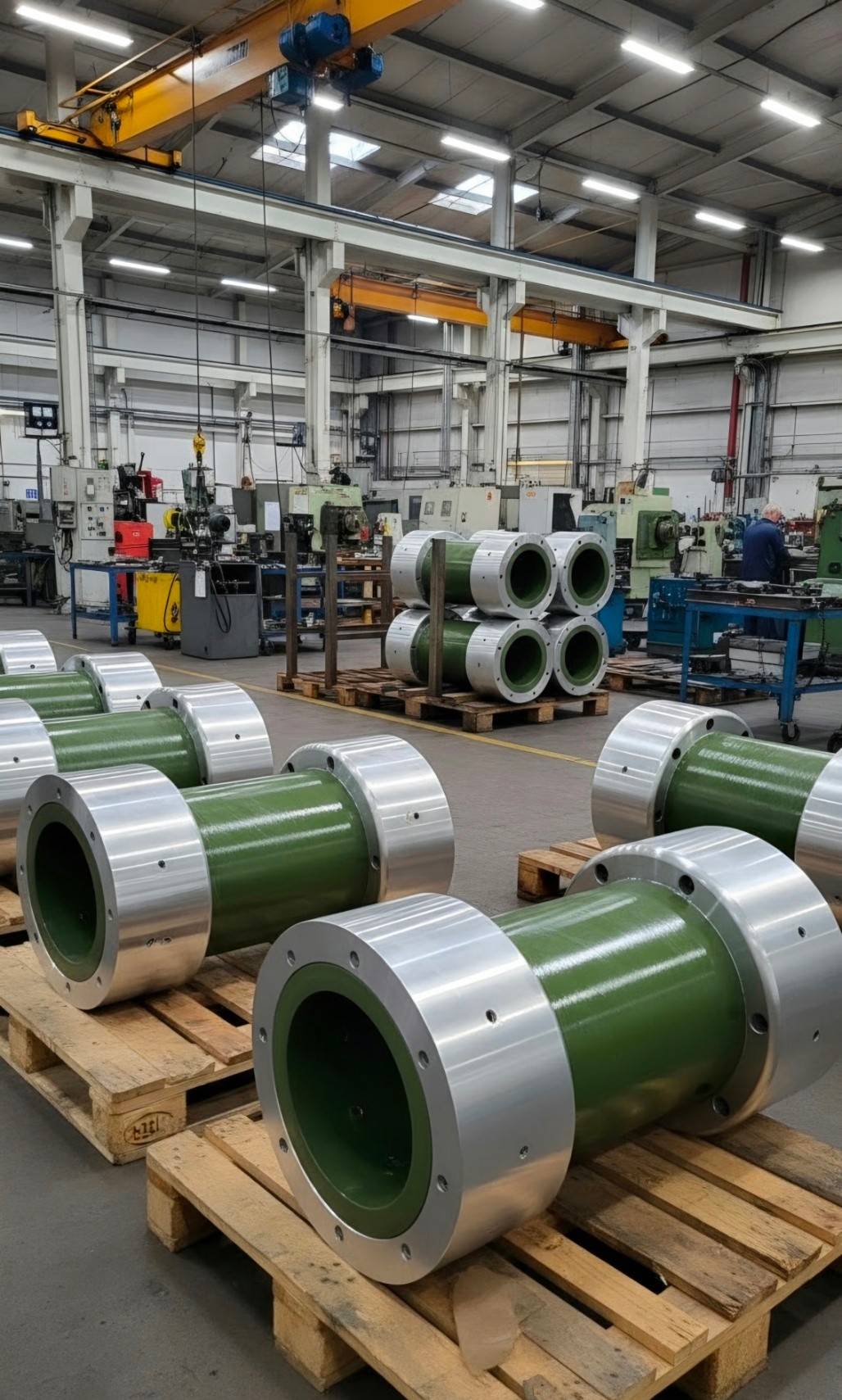
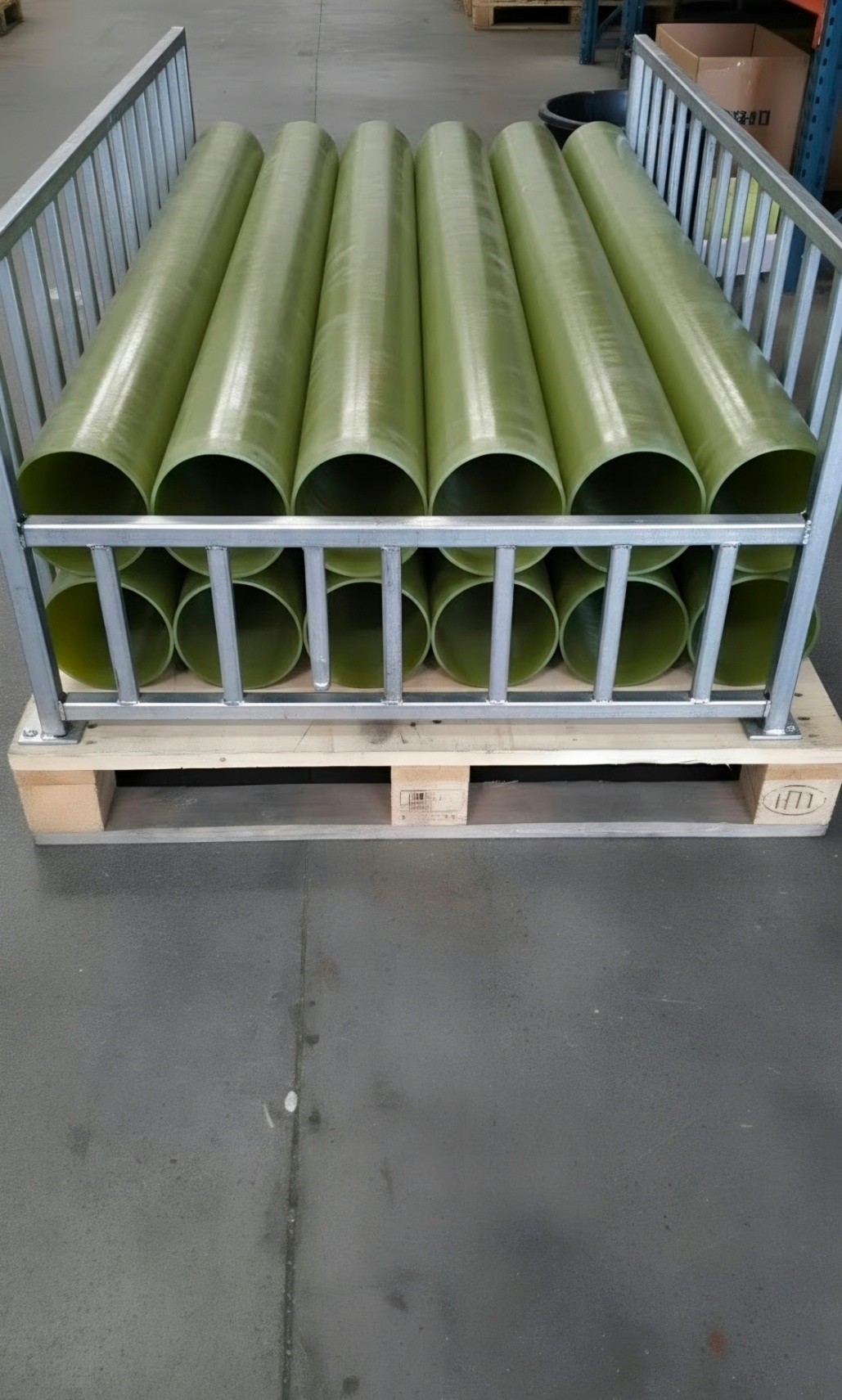
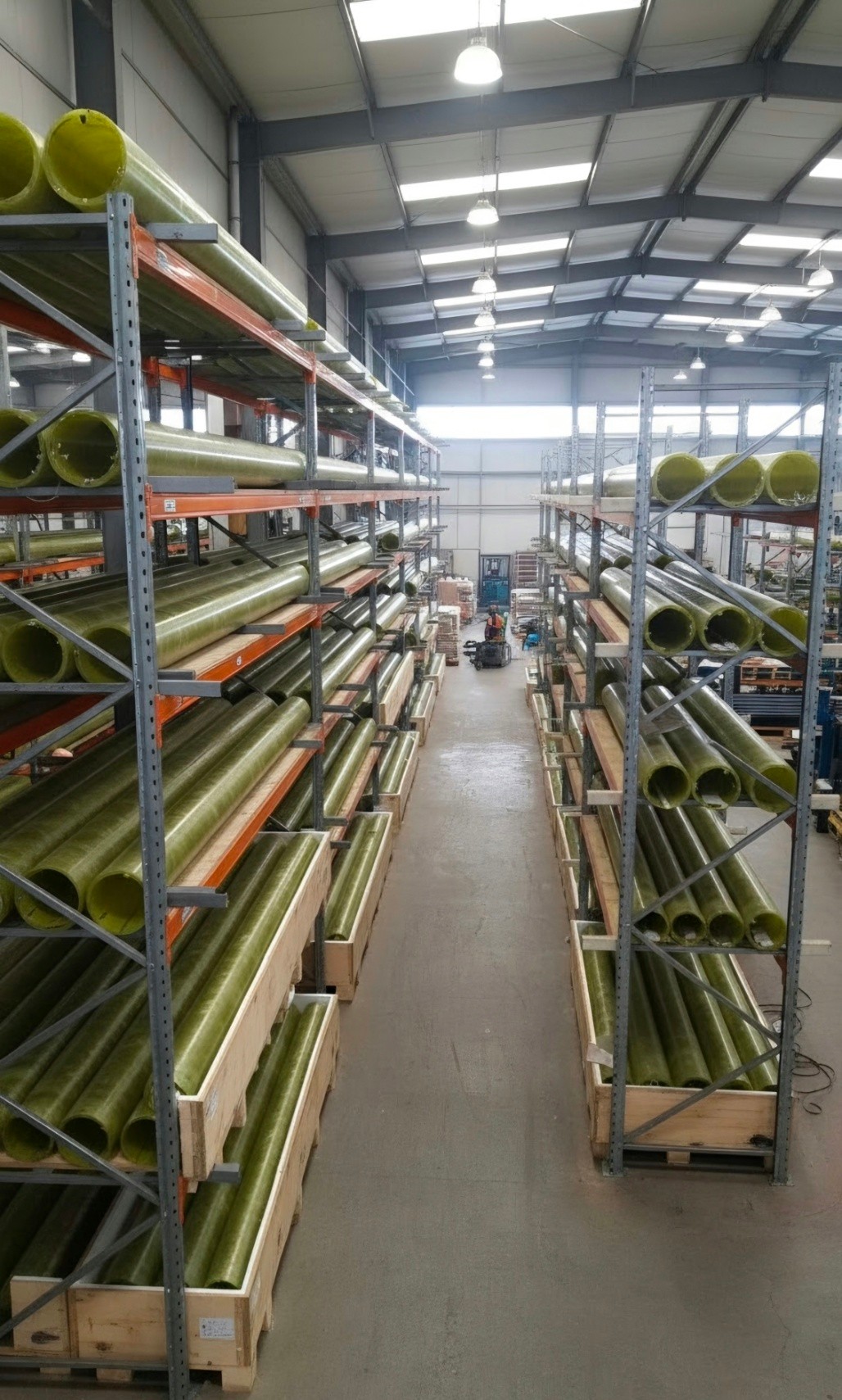
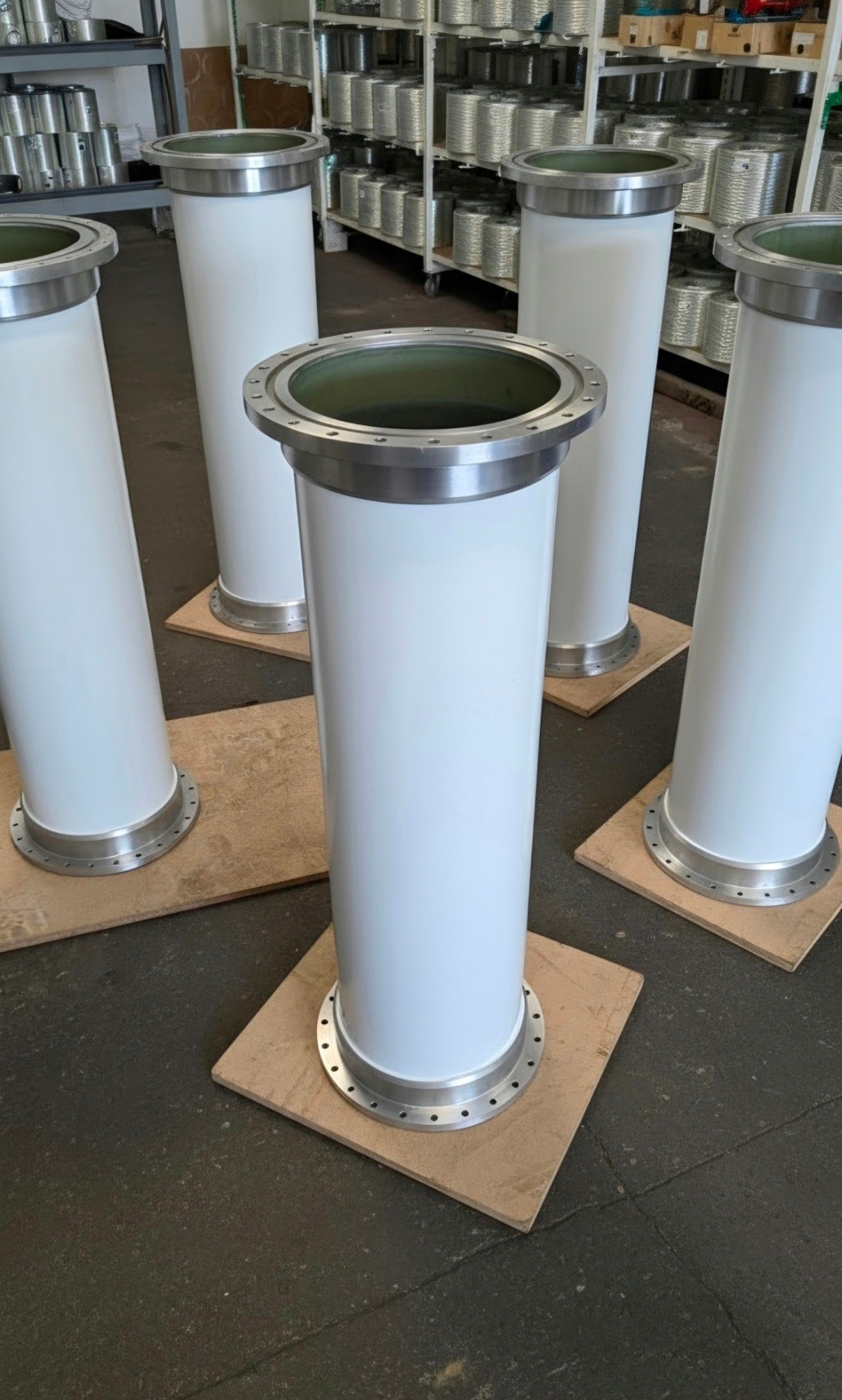
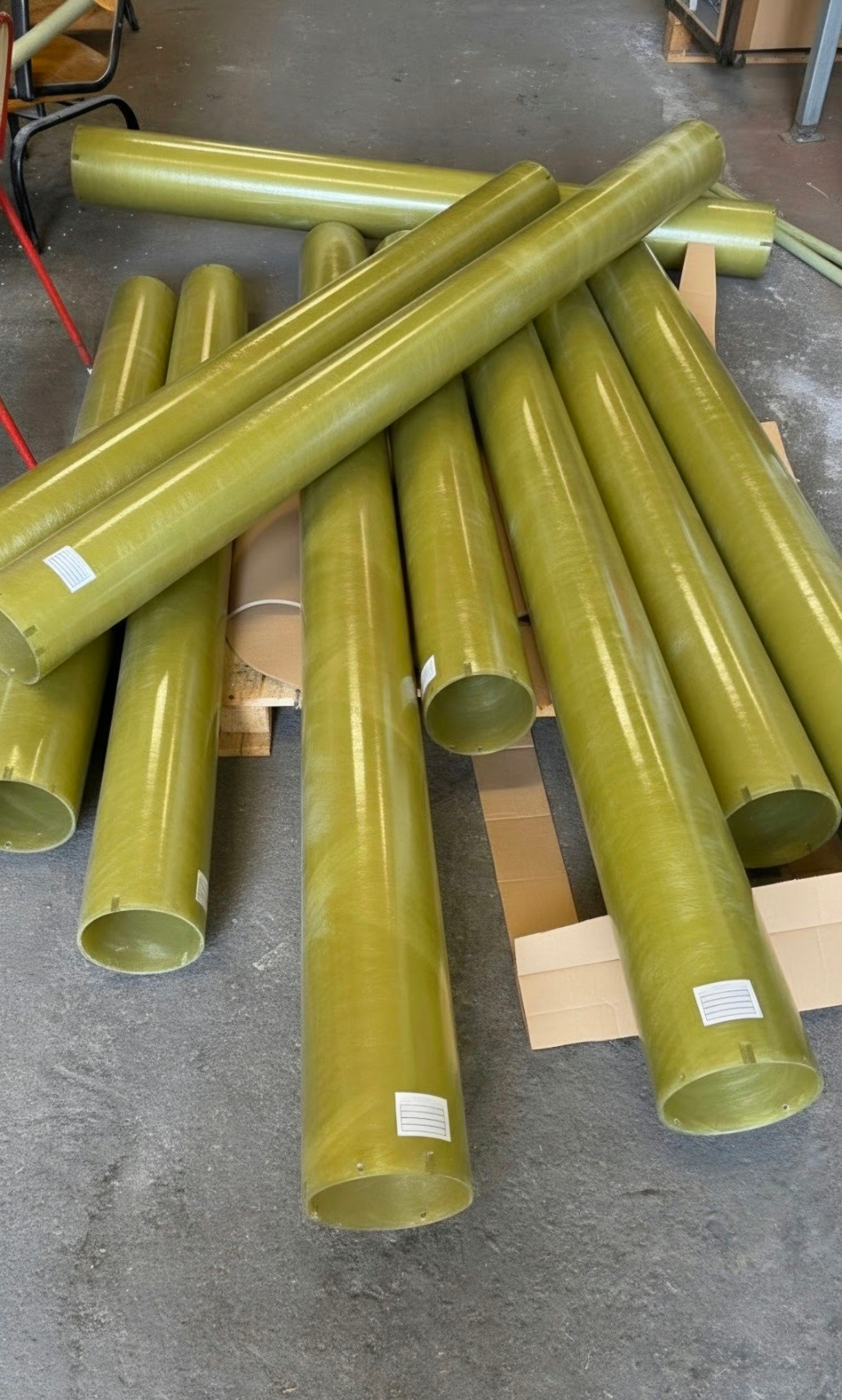
Our filament winding line produces custom FRP tubes and profiles in a wide range of sizes.
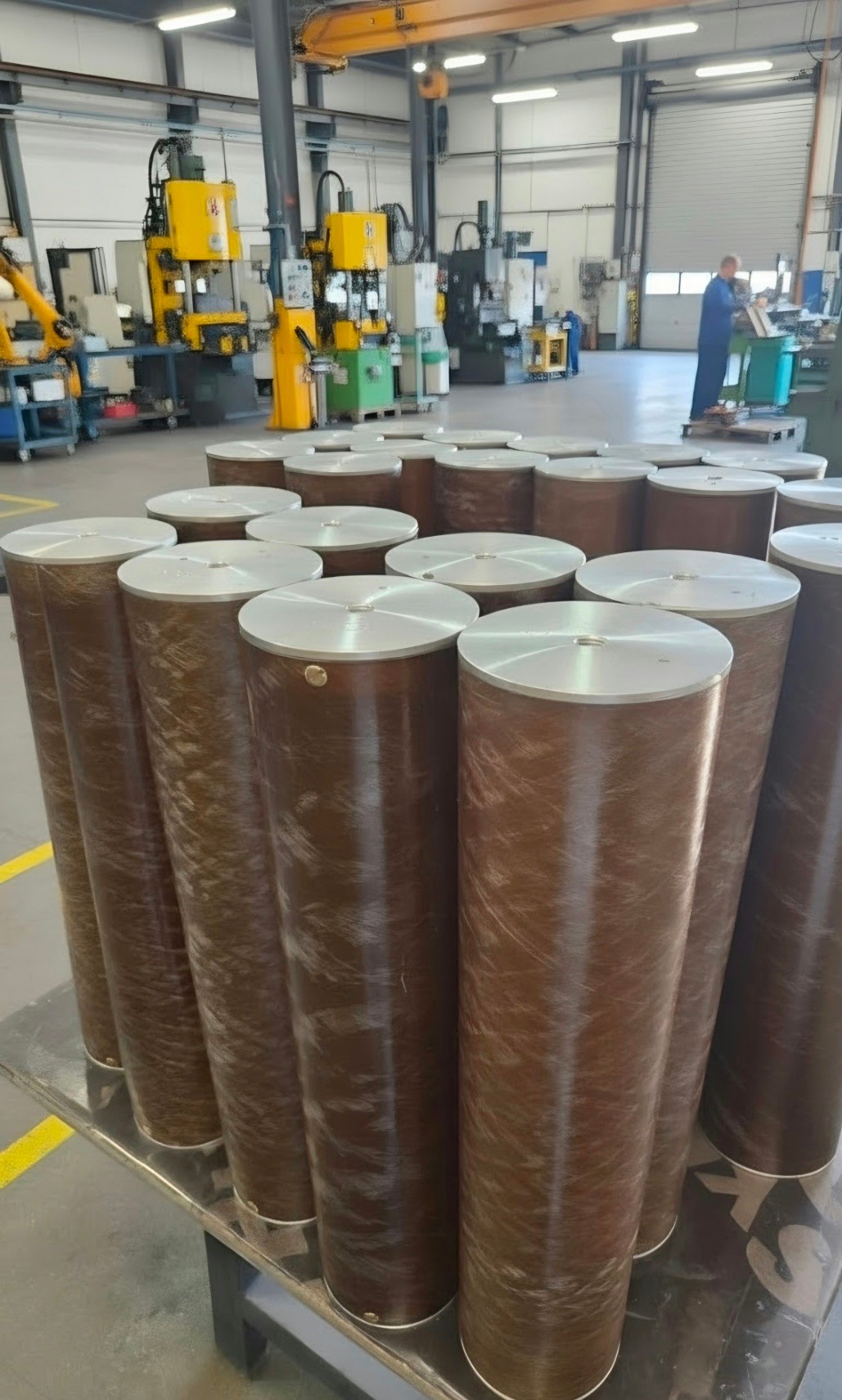
How the filament winding process works
Filament winding is one of the most precise ways to manufacture hollow composite parts. At Jopo Composite, every filament wound tube is produced in a controlled sequence:
- Mandrel preparation – a steel mandrel with the required inner diameter is cleaned and coated with a release agent so the finished part can be extracted.
- Fiber impregnation – continuous glass, carbon, Kevlar or polyester fibers are pulled through a resin bath, where they are fully wetted with epoxy, vinyl ester or polyester resin.
- Winding – the impregnated fibers are wound under controlled tension around the rotating mandrel. The winding angle and number of layers are set according to the mechanical and electrical loads the part must carry.
- Curing – the wound part is cured so the resin hardens into a rigid composite structure.
- Extraction and finishing – the mandrel is removed and the filament wound tube is cut to length, machined and inspected before delivery.
Filament winding patterns: hoop, helical and polar winding
The strength of a filament wound composite depends on the direction of its fibers. Hoop winding places fibers almost perpendicular to the tube axis for high pressure and crush resistance. Helical winding lays fibers at an angle to balance axial and torsional strength. Polar winding runs fibers nearly parallel to the axis and is used for closed shapes such as vessels. By combining these patterns, our engineers design FRP tubes optimized for each application.
Glass fiber and carbon fiber filament winding
Glass fiber filament winding is the most common choice for electrical insulating tubes and corrosion-resistant pipes, thanks to its excellent dielectric properties and good cost-to-performance ratio. Carbon fiber filament winding is used where maximum stiffness and minimum weight are required. Kevlar and polyester fibers are selected for impact and wear resistance. Learn more about the resins and fibers we work with on our FRP materials page.
Filament winding vs. pultrusion
Both are continuous composite manufacturing processes, but they serve different needs. Pultrusion pulls fibers lengthwise through a heated die and is ideal for constant cross-section profiles such as FRP channels, plates and rods. Filament winding wraps fibers around a mandrel at controlled angles, giving tubes and cylinders high hoop strength and pressure resistance. When a product needs both, our pulwinding process combines the two technologies.
Typical applications of filament wound products
- Electrical insulating tubes, housings and components
- Pipes, ducts and tubes for corrosive and chemical environments
- Structural tubes and rollers where low weight and high strength are needed
- Custom cylindrical composite parts made to customer drawings
Frequently asked questions
What is filament winding?
Filament winding is a composite manufacturing process in which continuous fibers, impregnated with resin, are wound under tension around a rotating mandrel in a precise pattern. After curing, the result is a strong, lightweight hollow part such as a tube or pipe.
What sizes can Jopo Composite produce?
Our filament winding line produces products with a diameter from 8 mm up to 1000 mm and a length of up to 3000 mm.
Which resins and fibers do you use?
We work with epoxy, vinyl ester and polyester resins, combined with glass, carbon, Kevlar or polyester fibers, depending on the mechanical, chemical and electrical requirements of your application.
Can you make custom filament wound products?
Yes. Our engineers work with you to choose the right combination of resin, fiber and winding pattern for your product. Contact us with your drawing or requirements.
What is the difference between wet winding and prepreg filament winding?
In wet filament winding, dry fibers are impregnated in a resin bath directly before they are wound on the mandrel. In prepreg winding, fibers that are already pre-impregnated with resin are used. Wet winding is the most widely used and cost-effective method for FRP tubes and pipes.
Why are filament wound tubes used as electrical insulators?
Glass fiber filament wound tubes combine high mechanical strength with excellent dielectric properties, so they are widely used for insulating tubes, housings and components in the electrical industry.
Do you offer filament winding fabrication services to custom drawings?
Yes. We manufacture custom filament wound composite parts to customer drawings and specifications, within our range of 8–1000 mm diameter and up to 3000 mm length. Contact us with your requirements for a quote.